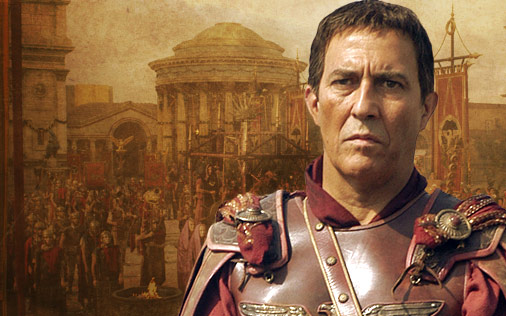
Take a flying leap year, Caesar!

Did you know that Julius Caesar was the father of Leap Year? The early Romans had a 355 day calendar and to keep festivals occurring around the same season each year a 22 or 23 day month was created every second year. Julius Caesar decided to simplify things and added days to different months of the year to create the 365 day calendar, the actual calculation were made by Caesar’s astronomer, Sosigenes. Every fourth year following the 28th day of Februarius (February 29th) one day was to be added, making every fourth year a leap year.

Now That’s Progress! Harnessing the power of lighting.

Okay, so we’ve all heard the Ben Franklin-kite flying-electricity story enough times, but what some of us may not realize is that those experiments led to one of the most important inventions in history. One that has arguably saved more lives than any other: The Lightning Rod. Pachow, pachow!
You see, most building materials like wood and drywall and… roof, are horrible conductors of electricity, so when hit with a streaking supercharge of juice, they tend to burst into flames. This can cause quite a predicament for those contained within. Back in Franklin’s day most homes and buildings were constructed with wood based materials, so it was common for lightning to ruin a perfectly good evening for many an unlucky household. The Lightning Rod offered a simple and effective solution. A pointed metal rod placed at the highest point of a structure would attract and conduct the energy a lightning bolt produces and pass it by wire down the side of a structure and into the ground where a much larger rod absorbs the bulk of the load. Genius.
Back in the day, lightning rods were very decorative and most contained glass bulbs, which, when shattered, offered clear evidence of their awesomeness.

So next time you find yourself in a tall building, a dwelling on a hill, an airplane, or a yacht or something, during a crazy lighting storm, give a quick thanks to Mr. F for keeping you perfectly safe.

…Well from lightning anyway.

History Schmistory: February 10. Now that’s a riot.

1355: The St. Scholastica’s Day riot breaks out in Oxford, England, leaving 63 scholars and as many locals dead in three days. And it all started with a bar brawl. Yeah, Oxford was a rough campus.

History Schmistory: February 8. Scout’s Honor!

1910: Lifelong adventurer, William D. Boyce  incorporates and charters the Boy Scouts of America. Only the year before, Boyce was hopelessly lost one evening on the foggy streets of London, when an unknown Scout came to his rescue and guided him safely to his destination. The boy then refused Boyce’s tip, explaining that he was a Boy Scout and was merely doing his daily good turn. Upon his return to the US, Boyce wasted no time initiating the Boy Scouts of America, which not only compelled mischievous young men to do nice things, but also bussed them out to the forest to learn how to survive.

-Unfortunately, nobody told Smokey they were coming…
 

History Schmistory: February 7. “The British are coming, the British are coming!”

1964: The British invade the US. With Rock! The Beatles, already causing Beatlemania in the UK and much of Europe, take their first small steps on US soil at Kennedy Airport. Their performance on The Ed Sullivan Show two days later proved a giant leap for music-kind, marking the beginning of the “British Invasion” in America.

Culture Buzz: Wax Off!

In the bustling cities of many Asian countries, including China, India and Japan, you are likely to run into an ear cleaning station here and there. Yes, the meticulous ear cleaners of Asia will, for a small fee, use an array of specially crafted instruments to clean the insides of your brain, (at least that’s what it feels like.) Don’t try it at home, you can really mess things up in there! America has not yet caught the street-side-ear-cleaning buzz, probably because they couldn’t hear it, -with all the wax up in there. But, who knows? Someday ear cleaning stands may become as common as taco trucks. Just so long as they never mix the two :P

Video Schmistory: February 5.

4 useless observances, Peter Pan and lots of Jello… Must be Feb 5!

History Schmistory: February 4. “Heigh-Hoooooooo!”

1938: Walt Disney Productions’ first full-length animated feature, Snow White and the Seven Dwarfs is released across the nation.

It was also the first full-length cel-animated feature in motion picture history, as well as the first animated feature film produced in America, and the first produced in full color. It became a major box-office success, making four times more money than any other motion picture released in 1938, and by 1939 it was easily the highest grossing film of all time. Which is awesome, because most critics seemed certain that Disney’s wildly anomalous film venture would fail miserably. Snow White and her 7 pals were a resounding success on so many levels, yet it still bothers them that their line is always the shortest at Disneyland.

GO THERE! “Would you like some water with that?”

Not only is Villa Escudero a great place to experience Philippine culture, it’s also the only place we know with a restaurant in the plunge basin of a waterfall!! Why not kick off your shoes and enjoy some Philippine cuisine while you wade!

History Schmistory: February 3. Tu-soon!

1637: The so-called “Tulip Mania” in the United Provinces (now the Netherlands) collapses faster than the 2008 US economy. Yep, the fleeting tulip craze was more potent than the Macarena or the pet rock, with certain savvy merchants gaining more than 400% of their initial investments. The most sought after tulips were deliberately infected with a mosaic virus which greatly weakened the already prolonged maturation of the plant, but happened to result in a wild array of variegated color schemes that were so popular, merchants began selling “futures”; flowers that did not yet exist! Whaaa?
The craze was predictably short-lived, being rudely interrupted by another unanticipated yet much more hostile virus. Namely, the flippin’ black plague!


Monkeys in contemporary 17th century Dutch dress are shown here dealing in tulips, a satirical commentary on speculators during the time of “Tulip Mania”.

Previous Older Entries